The Power of Social Documentary Photography: My Personal View On Creating Work

What Social Documentary Photography Means to Me
For me, social documentary photography is not just a genre or a label I add to my portfolio—it is a way of standing beside people and saying, “Your story matters.” At its core, social documentary photography is about looking closely at how we live together: our communities, our struggles, our resilience, and the systems that shape our daily lives. It is different from fast, surface-level images that chase trends or aesthetics. Instead, it asks for time, presence, and patience. You listen before you lift the camera. You observe before you frame. You try to understand the deeper forces behind what you are seeing: poverty, displacement, exclusion, joy, solidarity, faith, or resistance. A single image might show a child walking to school, a woman cooking, a worker resting, or a protest filling the streets—but behind that one moment are layers of context, history, and emotion. Social documentary photography tries to hold those layers in one frame, or in a careful sequence of frames, so that someone who was never there can still feel the weight of what is happening. In a world saturated with quick snapshots, this approach can feel almost slow and old-fashioned, but that is exactly where its power lies. It invites us to stay with an image long enough to ask questions: Who is this person? What are they carrying? What is their community facing? What do I recognise from my own life—and what challenges me? When I think about the power of social documentary photography, I am not thinking only about awards, exhibitions, or publications. I am thinking about the people who stand in front of the camera, often in vulnerable situations, and trust me to see them fully. I am thinking about viewers who pause, even for a few seconds, and feel a quiet shift in how they understand someone else’s reality. Those small shifts matter. They may not change the world overnight, but they can change how we talk, vote, donate, organise, teach, and remember. For me, creating this kind of work is a long, ongoing conversation between photographer, subject, and audience—and the camera is simply the bridge between them.
Responsibility and Intention in Social Documentary Photography
To understand the true power of social documentary photography, we also have to be honest about its responsibilities. Pointing a camera at people who are facing social, economic, or political pressure is never a neutral act. When you create images of families living with displacement, communities dealing with environmental damage, or workers surviving in harsh conditions, you are shaping how others will see them—sometimes for years to come. That means intention matters. Are you photographing to shock and entertain, or to witness and honour? Are you reinforcing stereotypes, or carefully challenging them? For me, social documentary photography is at its strongest when it restores complexity to people who have been flattened by headlines and statistics. It is easy to speak about “refugees,” “migrants,” “the poor,” or “the vulnerable” as if they are one faceless group. But when you spend time in their kitchens, schools, workplaces, or places of worship, you discover something else: humour, pride, routine, stubborn hope, and the tiny rituals that carry them through each day. My personal view on creating this kind of work is that you cannot stay at a safe distance—emotionally or physically. You have to sit on the floor, share the tea, listen to the long stories, and accept that you are now part of the scene, even if you stay behind the lens. At the same time, you must know when not to press the shutter: moments of grief or conflict that do not need to be recorded, situations where the presence of a camera might increase someone’s risk, or private spaces where consent is uncertain. Social documentary photography is often described as “giving a voice” to people, but I do not see it that way. People already have voices. My job is to lend visibility—to build images that carry their voices further without drowning them out. When that balance is right, a photograph can become more than a record of what happened. It can act as a quiet advocate, encouraging empathy, accountability, and sometimes even action from those who see it.
Balancing Heart and Craft in Social Documentary Images
From a distance, social documentary photography may look purely emotional—raw expressions, difficult environments, and intense stories. But behind every image that truly stays with you, there is a careful balance between heart and craft. For me, the camera is both a sensitive instrument and a disciplined tool. On one level, I am constantly aware of composition, light, timing, and rhythm. I notice how a doorway frames a figure, how a shaft of afternoon light touches a child’s face, how a crowd bends and flows around one person standing still. I pay attention to layers in the frame: who is in the foreground, who is half-hidden in the background, and how those relationships silently describe power, care, or isolation. On another level, I am listening for something deeper—an unsaid sentence, a repeated gesture, a tension in the air that tells me this moment is part of a larger truth. Social documentary photography is powerful when these two layers move together. If you focus only on aesthetics, you risk turning real suffering or resilience into visual decoration. If you focus only on the message, you may create images that are important but visually weak, and they will not travel as far as they could. My personal view is that we have to respect both: to make pictures that are honest to the subject and strong enough to stand in front of distracted viewers, noisy timelines, and crowded galleries. This is especially important when working in communities that are often misrepresented—places associated with conflict, poverty, or political struggle. I try to avoid images that simply confirm what people already think they know. Instead, I look for contradictions: laughter in difficult conditions, beauty in overlooked spaces, quiet dignity in the middle of chaos. Social documentary photography, for me, is not about reducing people to their worst day. It is about showing the fullness of their days, so that no single image – no single label – can define them. In that sense, every photograph is an invitation: not just to feel something for a moment, but to look more carefully, question more honestly, and recognise how connected our lives really are.
Long-Term Projects and the Ethics of Returning
Spending time with communities through social documentary photography changes the photographer as much as it documents the subject. Long-term projects demand more than a quick visit with a camera; they ask you to return, to remember names, to follow up on stories, and to accept that you will never fully understand everything you see. Over months and years, you begin to witness not only dramatic events but also subtle shifts: a child growing taller, a neighbourhood slowly changing, a policy decision leaving traces on daily routines. My personal way of working is rooted in this slow, long view. I prefer to walk the same streets again and again, to sit in the same courtyards, to hear similar worries and hopes expressed in new words. This repetition is not boring; it is where the real story lives. Social documentary photography, in this context, becomes a kind of shared memory between the photographer and the community. People start to recognise that the camera is not there to chase scandal or spectacle, but to stand witness to their ongoing reality. That trust is fragile, and it must be protected. There are days when I come home without a single image I am willing to keep, because making a photograph would have meant crossing a line, or adding pressure to an already heavy moment. There are other days when one frame holds so much tenderness or tension that I know it will stay with me for years. Carrying these stories is both a privilege and a weight. It means constantly asking myself: Am I the right person to tell this? Am I seeing clearly, or am I projecting my own assumptions? Who benefits from this image, and who might be harmed? These questions do not disappear with experience; if anything, they grow louder. But I believe they are part of what keeps social documentary photography honest. When we create work about real people in real conditions, we are not just building a portfolio—we are contributing to the visual record of how our societies treat each other. My personal view is that this responsibility should humble us, sharpen our choices, and remind us that every frame is part of a bigger conversation about justice, memory, and empathy.
How My Background and Field Work Shaped My Social Documentary Vision
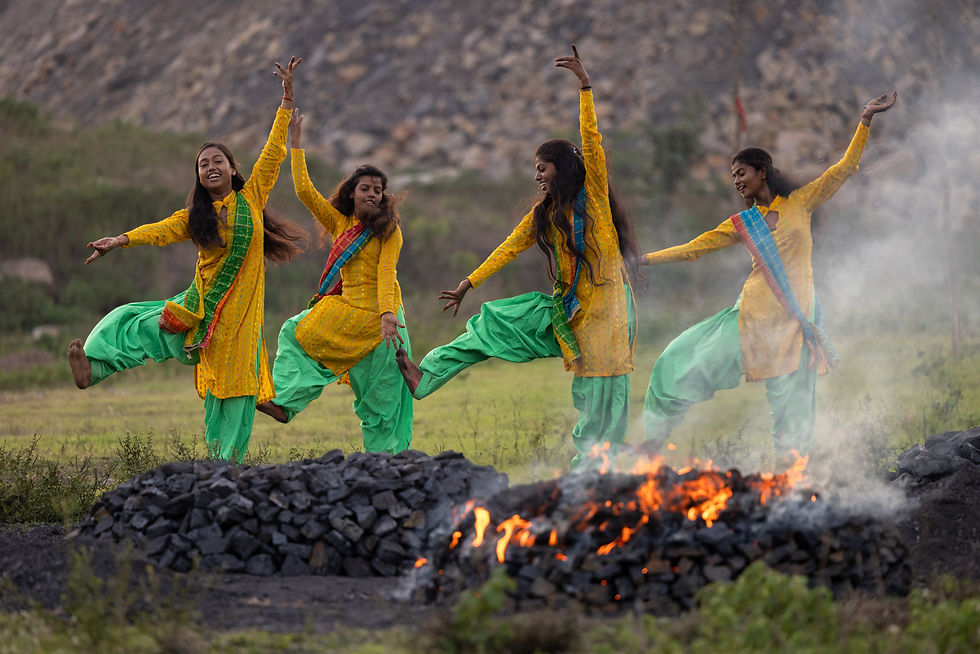
My own path into social documentary photography began long before I had the language to describe it. I was born in Egypt and, from an early age, I was drawn to the spaces where public stories and private lives overlap: streets just after a demonstration has ended, families eating together during difficult times, children inventing games in places that adults describe only with heavy words like “poverty” or “crisis.” Over the years, that curiosity grew into long-term work with communities in different parts of the world. I have spent time in orphanage communities in Uganda, watching how care, routine, and play coexist with loss. I have worked with displaced families in Bangladesh and Türkiye, documenting not only their journeys and challenges but also the everyday rituals that help them hold on to identity and dignity. In India’s coalfield communities, I have walked through landscapes shaped by labour and danger, listening to how people describe their dreams for their children amid thick dust and uncertain futures. These experiences have shaped how I understand social documentary photography. It is not just about “showing problems” to the world; it is about paying attention to how people create meaning, beauty, and connection even in harsh conditions. Technically, these environments taught me to work quickly with available light, to adapt to crowded or fragile spaces, and to anticipate moments without interrupting them. Emotionally, they taught me patience and humility: the recognition that I am always a guest in someone else’s story, no matter how many times I visit. When I raise the camera now, I carry all of those encounters with me. They remind me to look for complexity instead of easy narratives, to ask questions rather than arrive with answers, and to protect the people I photograph from being reduced to symbols. For me, the power of social documentary photography lies in this quiet practice of returning, listening, and witnessing over time—allowing the work to grow out of real relationships rather than quick visits and borrowed headlines.
Recognition, Large-Scale Commissions, and Staying True to the Story
As my social documentary photography has evolved, public recognition has arrived in ways I never planned for but deeply respect. Some of my long-term projects and photo essays have been published by international outlets and cultural platforms, where images of children in coalfields, students in crowded classrooms, or families rebuilding their lives after displacement have reached audiences far from the places where they were taken. Seeing this work in respected news and arts spaces is meaningful, not because it confirms my identity as a photographer, but because it gives the communities I work with a chance to be seen beyond statistics and stereotypes. At the same time, I have been invited to take on more formal roles as an in-house documentarian for large-scale events and programmes, particularly in the United Arab Emirates, where I am now based. Working behind the scenes at world expos, cultural festivals, and global climate gatherings has challenged me to apply the same principles of social documentary photography to very different contexts: capturing activists and artists onstage, children encountering new ideas, workers sustaining huge infrastructures, and audiences from many countries sharing the same space for a brief moment in time. These assignments demand discipline—tight schedules, complex security, shifting light, and crowded venues—but they also reaffirm why I started this work in the first place. In every setting, whether a remote village or an international pavilion, my focus is still on people: how they move, how they relate to each other, and what their faces reveal when they think no one is watching. External achievements—publications, exhibitions, official roles—are not the goal but the echo. They remind me that social documentary photography can travel further than the moment of capture, carrying fragments of real lives into conversations in other countries and other languages. My responsibility is to ensure that, as the work travels, it remains honest to the people who allowed me into their worlds. That is the standard I try to hold when I create new projects: every frame should honour the trust given, invite reflection rather than exploitation, and use its power to open, not close, the distance between “us” and “them.”

Choosing Which Stories to Tell and How to Enter Them
When people ask me how I decide which stories to pursue in social documentary photography, my answer is simple but not always comfortable: I follow the places where I feel both a pull and a responsibility. The pull comes from curiosity—those moments when I hear a fragment of someone’s life and cannot stop thinking about what it must feel like to wake up in their world. The responsibility comes from knowing that I am entering spaces already shaped by inequality, trauma, or neglect. Before I start a new project, I ask myself: Am I prepared to stay with this story for a long time? Am I willing to keep showing up even when there is no “big news” moment to capture? Social documentary photography loses its depth when it chases only the most dramatic scenes. For me, the most powerful images often appear in the quieter hours: a mother braiding her daughter’s hair before school in a refugee camp, friends sharing jokes outside a coal mine after a long shift, or children playing an improvised game in the shadow of a political slogan. These scenes may never appear in breaking news, but they describe how people actually live with the pressures around them. In my process, I rarely arrive with a rigid shot list. Instead, I start by listening—sometimes with my camera in my bag, sometimes with it resting but unused in my hand. I pay attention to what people choose to show me and what they prefer to keep private. I try to notice who speaks most, who stays silent, and who is never invited into the conversation at all. When I do photograph, I move slowly, looking for compositions that respect people’s bodies and boundaries. I position myself where I can see relationships: the distance between two people, the way a crowd centres around one figure, the small gestures that reveal care or tension. In social documentary photography, every choice—where you stand, when you click, which images you share—either reinforces or questions the stories the world already tells about a community. My personal goal is to create work that opens up those stories instead of closing them down, that invites viewers to stay longer with the image, and that gives the people inside the frame room to be more than one thing at once.
Who the Work Is For: Communities, Audiences, and the Space Between
Creating meaningful work in social documentary photography also means accepting that not every image, or even every project, will lead to visible change—and still choosing to do the work with integrity. There are days when the gap between what I witness and what I can show feels enormous. A photograph can reveal conditions, gestures, and moments of connection, but it cannot hold the full complexity of a life. That is why I see social documentary photography as one part of a larger ecosystem: alongside journalists, organisers, educators, artists, and community leaders who are all working in their own ways to shift reality. My role is not to replace them but to create visual language that supports their efforts and preserves what might otherwise be forgotten. In practical terms, this shapes how I think about audiences. Some projects are meant to travel to international platforms, where they can challenge distant viewers to rethink their assumptions. Others are designed primarily for the communities themselves: printed photographs for families, small exhibitions in local spaces, or quiet archives that can be revisited years later. Both purposes are important. If social documentary photography only looks outward, it risks turning people’s lives into stories for others. If it only looks inward, it may miss the opportunity to build bridges of understanding. My personal view is that the strongest work moves in both directions at once—grounded in the trust of the people it portrays, yet open enough to speak to those far away. This balance requires constant self-critique. I ask myself: Am I centring my own feelings too much? Am I simplifying a story to make it easier to digest? Am I overlooking who is missing from the frame? These questions do not have easy answers, but they keep the practice of social documentary photography alive, honest, and uncomfortable in the best possible way. In the end, the power of this work does not lie only in dramatic images or public recognition, but in the quiet moments when someone inside the story looks at a photograph and says, “Yes. That is us. That is how it feels.” When that happens—when the people who trusted me with their lives recognise themselves with dignity in the work—then I know I am moving, however imperfectly, in the right direction.
What Social Documentary Photography Asks the Photographer to Carry
The longer I work in social documentary photography, the more I realise that its power is not only in what it shows, but in what it asks us to carry. Every project leaves a trace. I can still see the eyes of children searching through coal, the posture of a mother waiting at a border, the quiet pride of a teenager teaching younger siblings in a crowded room. These images live in my mind long before they are edited, printed, or shared. They change the way I move through my own life: how I look at comfort, how I understand risk, how I define the word “normal.” This is one of the reasons I am careful about which stories I accept and how I approach them. Social documentary photography is not a series of “content opportunities”; it is a continuous relationship with human experience. If I treat it lightly, I risk turning real pain into a visual product. If I treat it seriously, I have to accept that the work will unsettle me, stretch me, and sometimes exhaust me. And yet, I keep returning to it because I believe that honest images can create small, necessary shifts in how we see each other. A photograph of a family living with displacement might not change policy, but it can make it harder to speak about “refugees” as if they are all the same. A sequence of images showing daily life in a marginalised neighbourhood might not erase inequality, but it can challenge the idea that people there live only in tragedy. On a more personal level, social documentary photography teaches me to stay awake. It stops me from gliding past headlines, from accepting shallow narratives, from assuming that silence means the absence of stories. Each time I step into a new space with my camera, I am reminded that the world is bigger, more layered, and more fragile than I can see from my own position. That awareness is both a burden and a gift. It asks me to slow down, to listen harder, and to keep questioning my own comfort. In that sense, the power of social documentary photography is not just outward-facing; it is also deeply inward, reshaping the photographer and, hopefully, anyone willing to look closely at the work.
A Lifelong Practice of Witnessing Through Social Documentary Photography
When I think about the future of my work and of social documentary photography more broadly, I do not imagine a single, heroic project that “changes everything.” Instead, I see a long line of images and encounters, each one adding a small piece to a much larger mosaic of how we remember this time in history. Technology will keep evolving—cameras will become smarter, platforms will shift, attention spans will rise and fall—but the core questions will remain: Who is seen? Who is ignored? Who controls the narrative? For me, committing to social documentary photography means choosing, again and again, to stand on the side of those whose stories are too often flattened or silenced. It means using whatever access, skill, and recognition I have to build work that points back to them, not to me. Practically, that might look like continuing long-term projects with communities I already know, beginning new work in places where important stories are hidden in plain sight, or collaborating more closely with organisations and activists who are already doing the slow, difficult work of change. Creatively, it means pushing myself to keep learning: new ways of sequencing images, new formats for sharing them, new collaborations with writers, filmmakers, or educators who can carry the stories into different spaces. Personally, it means staying honest about my own limits and biases, making room for other voices, and remembering that I am one photographer among many who are trying, in their own ways, to document the world with integrity. The power of social documentary photography is not just in a single “iconic” frame; it is in the accumulation of sincere attempts to witness. A viewer might encounter my work on a gallery wall, in a magazine, in a report, or online. They might pause for only a few seconds—or they might return to an image years later, when their own life has changed, and they are ready to see something new inside it. I cannot control that part of the journey. What I can control is how I show up when I am invited into someone else’s reality: with respect, with patience, with technical and emotional readiness. My personal view is simple: if I can create work that allows people to recognise themselves with dignity, invites others to feel a little more responsible for each other, and leaves behind a truthful visual trace of our shared time on this earth, then social documentary photography is worth every step, every risk, and every quiet hour spent listening before I press the shutter.
Turn your goals into real achievements with our tailored services – request the service now.
FAQ- Social Documentary Photography
Comments